

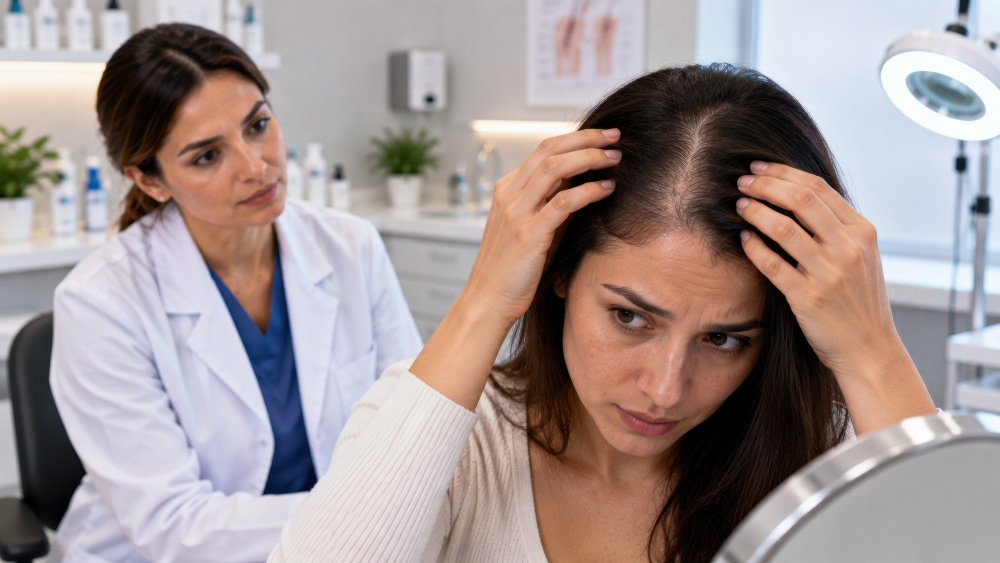
What Is Hair Thinning in Women?
Hair thinning in women means a gradual loss of hair volume. While some hair loss is normal, noticeable thinning can worry many women. For example, you might see more hair on your brush or in the shower. Sometimes, the scalp becomes more visible. Hair thinning is different from complete baldness. Instead, it often shows as less fullness or density. Although this can happen at any age, it is more common as women get older. Many women look for answers and support when they notice these changes. Understanding what causes hair thinning can help you find the right solution.
Common Causes of Hair Thinning in Women
Many factors can lead to female hair loss. However, some causes are more common than others. Knowing these can help you talk with your doctor about possible solutions.
Because many causes exist, it is important to find out what is affecting you. According to the American Academy of Dermatology, female pattern hair loss is the most common type in women.
How Hair Thinning Is Diagnosed
Doctors use several steps to diagnose hair thinning in women. First, they ask about your health history and family background. Next, they may check your scalp and hair closely. Sometimes, doctors gently pull a few hairs to see how many come out. Blood tests can help find issues like low iron or thyroid problems. In some cases, a small scalp sample (biopsy) is needed. Because each case is unique, your doctor will choose the best tests for you. Early diagnosis helps find the right treatment for thinning hair in women.
Treatment Options for Hair Thinning in Women
There are many treatment options for thinning hair in women. Your doctor will help you choose what works best for your needs. Some treatments focus on the cause, while others help hair grow back.
Because not every treatment works for everyone, it is important to discuss your options with a healthcare provider. The CDC and peer-reviewed journals support these evidence-based treatments.
Lifestyle Tips to Support Hair Health
Healthy habits can make a big difference in hair strength. While treatments help, daily care is also important. Try these tips to support your hair:
Because small changes can add up, try to make these habits part of your routine. Many women find their hair looks and feels better with these simple steps.
Preventing Hair Thinning in Women
Although not all hair loss can be prevented, some steps may lower your risk. For example, early action can help protect your hair. Try these prevention strategies:
Because every woman is different, prevention may look different for each person. However, early care and healthy habits can help reduce the risk of hair thinning in women.